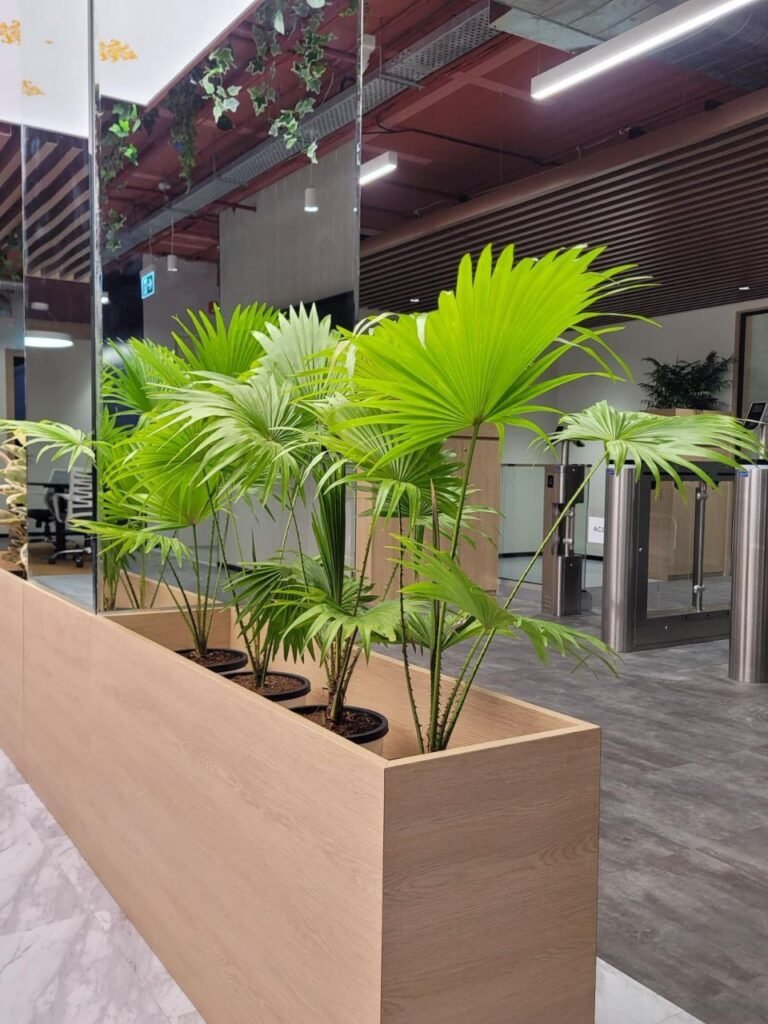
Planter Drainage & Detailing for Interiors
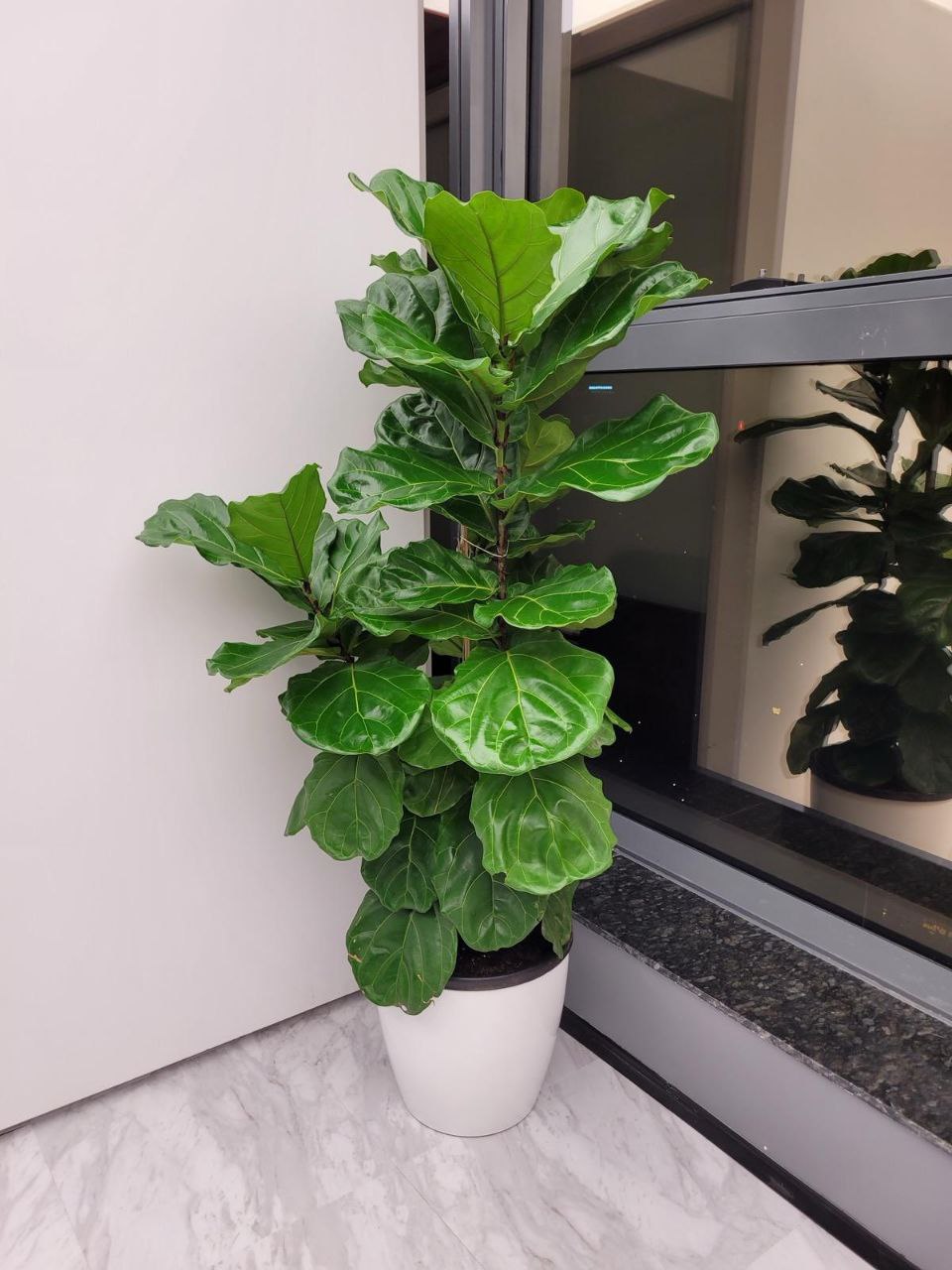
Of everything that can go wrong with plants in a finished interior, this is the one with a real invoice attached. A dying plant is disappointing. A watermark spreading across engineered timber, or moisture wicking into the base of a plastered wall, is a defects claim.
The useful reframe: this is a wet detail, not a gardening problem. You already know how to keep water away from finishes. A planter deserves the same thinking as any other point where water meets a building.
This is part of our guide for architects and interior designers.
⚠️ The detailing mistakes that cost the most
✗ Standing a drilled nursery pot directly on timber, stone or joinery
✗ Solving a spill with a saucer, and creating a permanently damp patch underneath
✗ Pushing planters tight against plaster, skirting or a plinth
✗ Building planters into joinery or masonry without tanking them
✗ Specifying a sealed built-in planter with no overflow and no inspection access
✗ Choosing shallow decorative planters with no reservoir depth
✗ Never checking point loads for large planters on raised access floors
How planter water damage actually happens
A nursery pot with drainage holes placed directly on timber or stone. Every watering releases moisture underneath, where nobody sees it until the finish has cupped or stained.
A saucer solves the spill and creates a permanently damp, unventilated patch beneath it. On timber this is worse than the original problem.
A planter pushed tight against plaster or a plinth. Moisture migrates into the substrate, and paint blisters in a line along the base.
A masonry or joinery planter built as part of the interior but never waterproofed. It behaves like a slow leak into the structure around it.
The detail that solves nearly all of it
✅ Double-potting (the cachepot system)
The plant stays in its functional grow pot — with drainage holes. That pot sits inside a decorative outer planter that has no drainage hole at all.
The outer planter is the waterproof vessel. Excess water collects in its base, clear of the root ball, and is removed on maintenance visits. Nothing wet ever touches your finish.
Three things make this work properly rather than nominally:
A gap under the inner pot. Sit the grow pot on feet, a riser or a drainage layer so the root ball is never standing in collected water. Roots sitting in water is the fastest route to root rot — the double-pot protects your floor and kills the plant if this step is skipped.
Enough reservoir depth. The void beneath needs to hold a normal watering without reaching the pot base. Shallow outer planters defeat the whole system.
Removable inner pot. The real advantage: a plant that fails is lifted out and swapped in seconds without disturbing your planter, your floor or your styling.
Specifying built-in planters
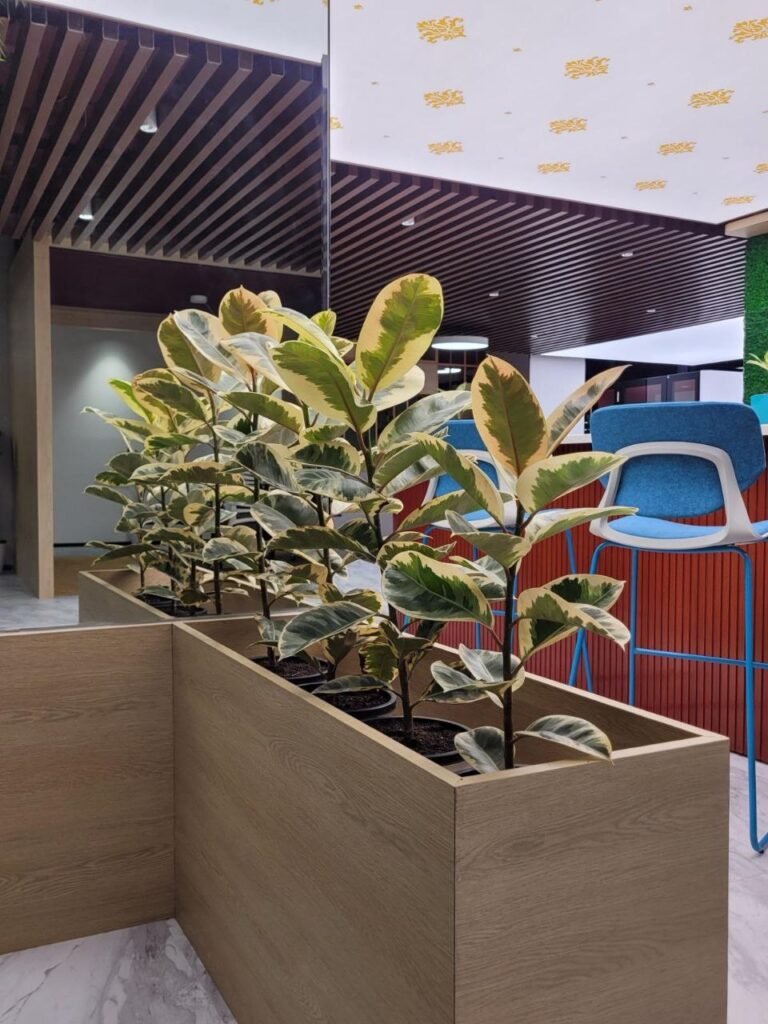
If the planter is part of the joinery or masonry, treat it as a wet area:
Tank it. A waterproof membrane or a fitted rigid liner, not paint or sealant alone. Sealant fails at the joints, which is exactly where the water goes.
Detail the overflow. Decide now where excess water goes when someone overwaters — because someone will. A blind sealed box with no overflow becomes a stagnant reservoir.
Keep it serviceable. Somebody must be able to reach the base to check water level and clear debris. A beautifully integrated planter that cannot be inspected will fail invisibly.
Isolate it from adjacent finishes. An air gap, or a genuine waterproof separation, between the planter and any timber, plaster or stone it touches.
Rule of thumb: if you would not detail it that way for a planter box on a balcony, do not detail it that way indoors. The water volume is smaller; the finishes are far more expensive.
Weight — the constraint that gets forgotten
Wet growing medium is heavy, and a large specimen in a substantial planter is a serious point load. Two situations need checking before you commit:
Raised access floors. Common in offices, and they have defined point-load limits. A large planter concentrating weight on a small footprint over a single panel is a genuine risk — spread the load or reposition over a pedestal.
Upper floors and cantilevers. A cluster of large planters in one area is worth a structural sanity check, particularly on terraces, balconies and slab edges.
Practical mitigations: lightweight fibreglass or composite planters instead of concrete or ceramic; lightweight growing media rather than heavy soil; and castors or a wheeled base for anything that may need to move for cleaning or reconfiguration.
Self-watering planters — when they’re worth it
Sub-irrigated planters hold a reservoir below the root zone and let the plant draw water up as it needs it, usually with a visible level indicator. For office and commercial interiors they solve the single most common failure — overwatering by a well-meaning person on a fixed schedule — and they extend the interval between maintenance visits.
They cost more per unit and are not a substitute for maintenance; the reservoir still needs checking, topping and periodic flushing. But for hard-to-reach positions, or any space where a fixed watering routine is unrealistic, they are usually the right specification.
A short checklist for your planter schedule
☐ Outer planter is watertight, with no drainage hole
☐ Inner grow pot is removable and raised clear of collected water
☐ Reservoir depth suits a full watering
☐ No planter in direct contact with timber, plaster or a plinth
☐ Built-in planters tanked, with overflow and inspection access
☐ Point loads checked on raised floors and upper levels
☐ Finish and colour confirmed against the material palette
☐ Sizes and finishes confirmed available for the programme dates
How Alpine Greens solves this for you
🌿 What we do differently
✓ Sealed outer planters as standard — no drainage hole, raised removable inner liner, so no water ever reaches your finish.
✓ Planters matched to your material palette, not whatever is in stock that week.
✓ We advise on built-in planters at drawing stage — tanking, overflow and inspection access, before the joinery is made.
✓ We flag weight and point loads for large specimens on raised access floors and upper levels.
✓ Reservoir levels are checked by us on every scheduled visit, rather than left to whoever is nearest.
✓ If a plant fails, we lift the liner out and swap it — your planter, floor and styling are never disturbed.
📚 The rest of this series
🏛️ Indoor plants for architects and interior designers — the ten problems and the workflow that prevents them.
🌿 Choosing plants for low-light and air-conditioned interiors.
Book a Free Site Visit
Send us your drawings and we’ll advise on planter build-ups, positions and finishes before anything is committed — then a written quote, no obligation.
📞 +91 95117 44907 💬 WhatsApp Us
⭐ Rated 4.9/5 from 360+ Google reviews · Alpine Greens Plants Nursery, Pashan, Pune