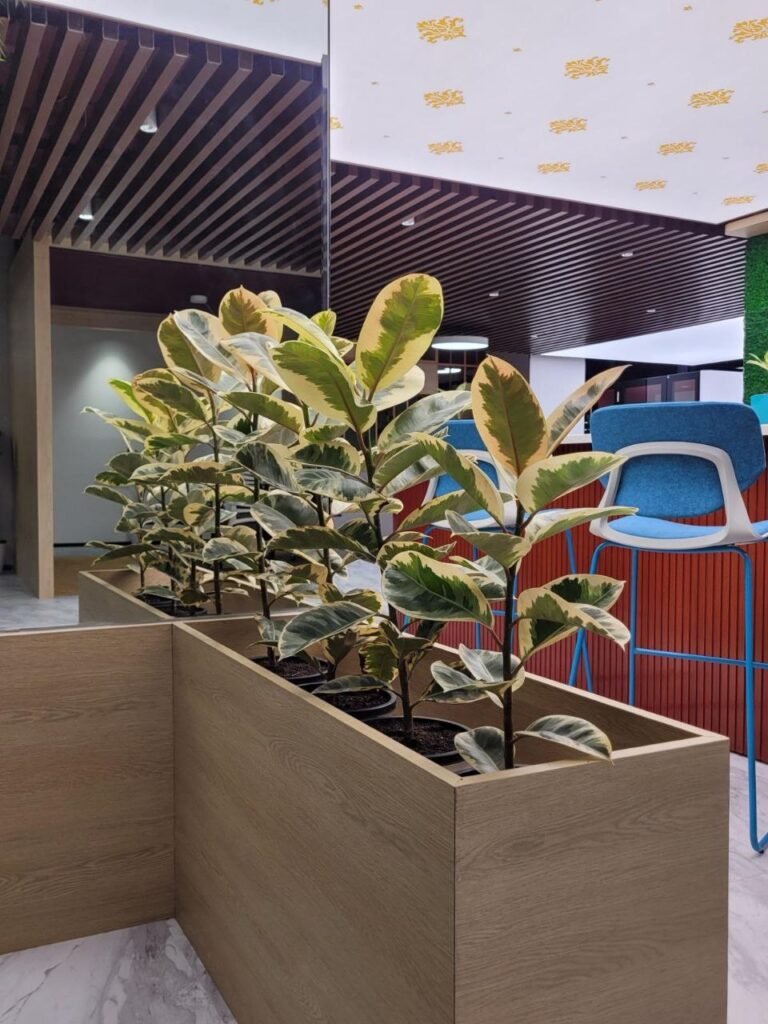
Who Maintains the Plants After Handover?
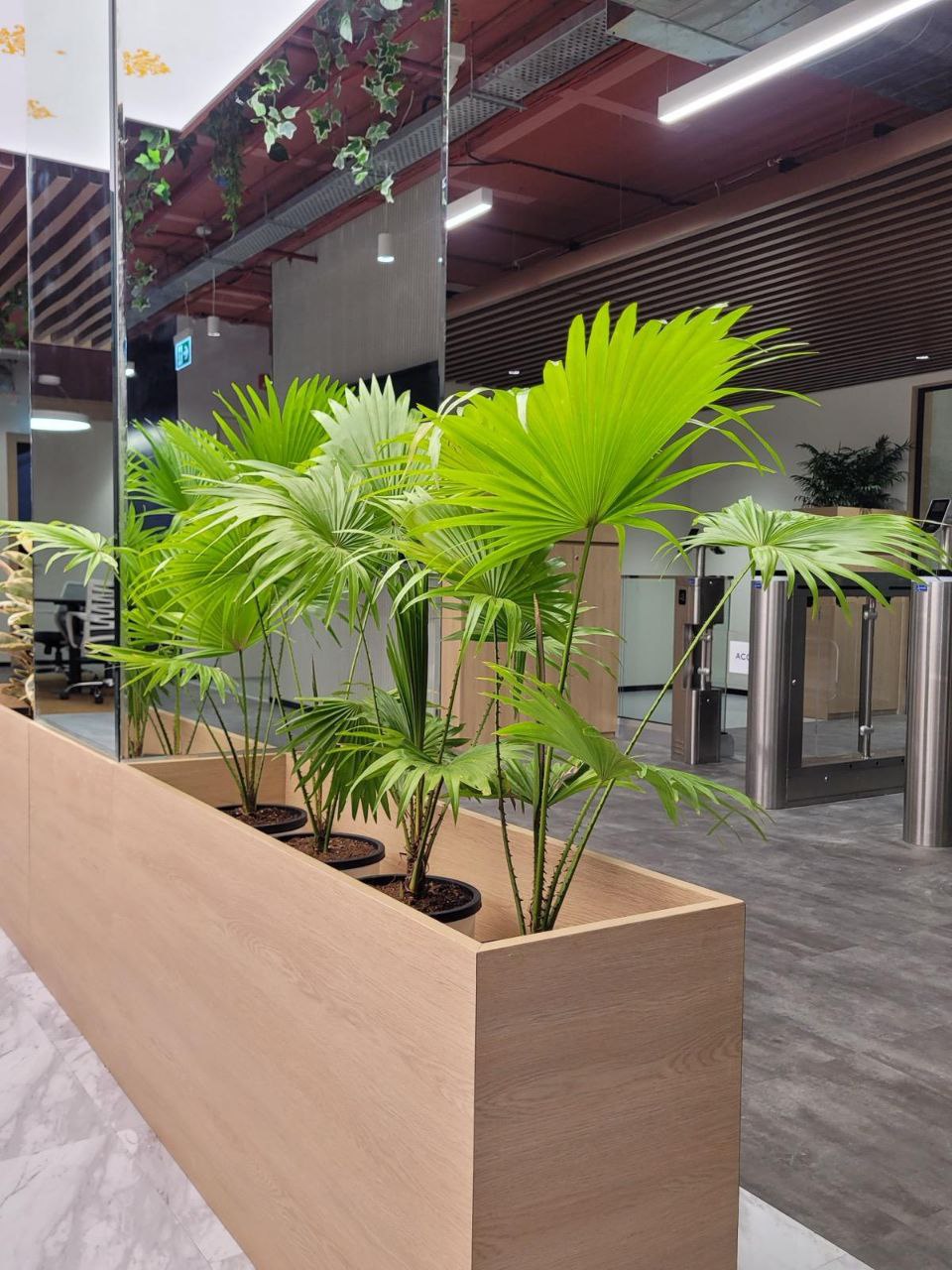
A plant position isn’t a location on a drawing. It’s a place a person has to physically reach, safely, roughly every one to two weeks, for as long as the space is in use. Most greenery that looks neglected a year after handover isn’t neglected by choice — it’s simply somewhere nobody can comfortably get to.
This is part of our guide for architects and interior designers.
⚠️ The access and handover mistakes we see most often
✗ Positioning plants above comfortable reach with nowhere to set a ladder
✗ Slotting greenery behind fixed or heavy furniture
✗ Placing plants above a client’s desk, rug or leather seating
✗ Specifying a vertical garden with no irrigation, drainage or module access designed in
✗ Installing a green wall before the maintenance contract is agreed
✗ Handing plants to housekeeping with no schedule and no training
✗ Leaving the maintenance owner unnamed in the handover documentation
The access test
🔎 Ask this at every position
1. How does a person reach this plant?
2. What do they stand on — and is there clear floor to place it?
3. Can they carry a water can there without crossing something precious?
4. If this plant has to be replaced, does it come out without dismantling anything?
Anything above comfortable standing reach — roughly two metres — needs steps or a ladder, which needs clear floor space to set down. That space has to exist and be reachable during working hours, not be occupied by a desk, a sofa or a display.
The three positions that cause the most trouble
High shelves and elevated ledges. Trailing greenery along a high shelf is one of the most photographed details in interior design and one of the least serviceable. If it’s above reach, every single watering becomes a ladder job — which in practice means it gets done far less often than the plant needs. Either bring it within reach, specify self-watering planters to stretch the interval, or accept a higher servicing cost and write it into the maintenance scope.
Narrow corners behind furniture. A plant slotted behind a sofa or between a cabinet and a wall looks resolved on plan. In practice someone must move furniture to water it, so it gets watered from an awkward angle, or missed. Test it honestly: can one person reach the soil without moving anything heavy?
Anything above something expensive. A plant on a shelf over a client’s desk, a leather chair or a rug means every watering happens above a surface that must not get wet. Either move the plant or specify a sealed sub-irrigated planter with no possibility of overflow.
Vertical gardens are systems, not finishes
A green wall is drawn like a finish and behaves like an engineered system. When they fail — and unmaintained ones fail fast and very visibly — it’s almost always because the servicing requirements were never designed in.
Specify these five things explicitly:
Irrigation. Automated drip or recirculating systems are standard for anything of size. Hand-watering a vertical garden is not realistic beyond a small panel. That means a water supply and, usually, power.
Drainage and overflow. Water travels down through the system and has to be caught and taken somewhere. This is the detail that damages the floor below when it’s missed.
Module-level replacement. Individual plants will fail. The system must allow one plant to be swapped without dismantling a panel — otherwise a single dead plant stays dead.
Access to the full height. Including the top. If the upper rows can only be reached from a ladder in a busy circulation route, servicing will be deferred and it will show at the top first.
Light across the whole face. The top and bottom of a wall often receive very different light. Either plant accordingly or add integrated lighting — a uniform species list on a wall with uneven light produces a visibly patchy result.
If a green wall’s maintenance contract isn’t agreed before installation, it is safer not to install it. A failing vertical garden damages a scheme more than a blank wall ever would.
The handover gap
Here’s the pattern we see constantly. The project completes. Everyone assumes someone else has the plants. The client’s housekeeping team waters enthusiastically for two weeks, then stops. Nobody notices decline until it’s advanced, and by then the client’s impression of the space — and of the project — has quietly shifted.
Overwatering, not neglect, is what kills most indoor plants. It’s the natural failure mode when a well-meaning person waters on a fixed day regardless of what the plant actually needs. Handing greenery to untrained staff without a schedule isn’t a neutral act; it’s a predictable outcome.
What a maintenance contract should actually specify
| Term | Why it matters |
|---|---|
| Visit frequency | Watering to a schedule beats watering on impulse. Fortnightly suits most interiors; hospitality and high-footfall spaces need more. |
| Scope of each visit | Watering, pruning, leaf cleaning, pest inspection, feeding, soil top-up. Leaf cleaning matters — dust dulls foliage and blocks photosynthesis. |
| Replacement terms | Who pays when a plant fails? This is the clause that decides whether decline gets fixed or argued about. |
| Response time | How fast a damaged or declining plant is swapped — critical in reception and public areas. |
| Who holds stock | Fast replacement is only possible if the provider actually has comparable plants growing. |
| Access arrangements | Servicing hours, security clearance, lift access — especially in offices, hotels and hospitals. |
Put the answer in the handover documentation. One short section naming the maintenance provider, the visit schedule and the replacement terms converts an assumption into an obligation — and protects you if the greenery is ever raised as a defect.
Why renting resolves the ownership question
When plants are purchased, the client owns a depreciating asset that needs skilled care they usually don’t have, and every replacement is a new negotiation. When they’re rented on an AMC, the provider owns the plants and carries the replacement risk — so keeping them alive is the provider’s commercial problem, not your client’s operational one.
For you, that means a handover with a named party and a schedule, rather than a gap and a hope.
How Alpine Greens solves this for you
🌿 What we do differently
✓ We review access at survey stage and flag any position that will be hard to service — before it is built, while it is still cheap to move.
✓ We service on a fixed agreed schedule, not on request: watering, pruning, leaf cleaning, pest control and feeding.
✓ Anything not thriving is replaced free. The replacement risk is ours, so decline gets fixed instead of debated.
✓ We grow our own stock in Pashan, so replacements are same-species and fast rather than whatever is available.
✓ We recommend self-watering planters for positions where a normal watering interval isn’t realistic.
✓ You get a maintenance scope you can paste into your handover documentation — named party, visit frequency, replacement terms.
📚 The rest of this series
🏛️ Indoor plants for architects and interior designers — the ten problems and the workflow that prevents them.
🌿 Choosing plants for low-light and air-conditioned interiors.
Book a Free Site Visit
We’ll review access and servicing for every position in your project, and give you a maintenance scope you can put straight into your handover documentation — with a written quote, no obligation.
📞 +91 95117 44907 💬 WhatsApp Us
⭐ Rated 4.9/5 from 360+ Google reviews · Alpine Greens Plants Nursery, Pashan, Pune